Reverse engineering with AI: the complete guide to REA, the Adobe clones and what really changes
 By Christian Alves, founder of SINOON
Reverse engineering with AI means using artificial intelligence agents to analyze an already compiled program and understand how it works, without access to the source code. In October 2026 the topic exploded with REA, which connects agents such as Claude Code to tools such as Ghidra and IDA, and with the ArtCraft apps, presented as open alternatives to Adobe programs. The technique became faster and more accessible, but it still requires specialists, consumes a lot of tokens and doesn't copy what lives in a product's servers, data and partnerships.

What reverse engineering is
Reverse engineering is the way back: starting from a finished product to find out how it was made. In software, it means analyzing an already compiled program, the file you install and run, to understand what it does inside without having the original source code: which functions exist, how data is stored, which servers it talks to and which rules it applies.
The practice is old and has legitimate uses. In the 1980s, Compaq and Phoenix recreated the IBM PC BIOS through "clean room" processes, in which one team documents the original's behavior and another writes new code without ever seeing the first. In 1992, Samba was born, letting Linux computers talk to Windows networks. Video game emulators, security tools and old-game preservation projects follow the same principle. In 2019, the NSA, the US security agency, released Ghidra for free, one of the main programs in the field.
In October 2026 the subject left its niche. Almost in the same week, REA went viral, an open tool that puts AI agents in charge of these programs, along with the ArtCraft apps, presented as free alternatives to Photoshop, Premiere and other Adobe products. Headlines talked about the end of Adobe and even the end of software. This guide brings together what is concretely known, based on the official repositories, academic research and the analysis developer Fabio Akita published on October 13, and explains what it changes for companies.
Timeline: more than 40 years of reverse engineering
AI arrived in a discipline with decades of history, court cases and mature tools. The milestones that help explain the current moment:
- ✓1982 to 1984: Compaq and Phoenix recreate the IBM PC BIOS in a clean room, paving the way for compatible computers.
- ✓1992: Samba is born, letting Unix and Linux computers talk to Windows networks. The same year, a US court decides Sega v. Accolade in favor of disassembly for compatibility.
- ✓2000: Sony v. Connectix confirms, in the United States, that disassembling a program to build a compatible product can be fair use.
- ✓2004: the European Commission fines Microsoft 497 million euros and requires it to document protocols so competitors can interoperate with Windows.
- ✓2019: the NSA releases Ghidra as open source, putting professional-grade tools within anyone's reach.
- ✓2024 and 2025: recompilation projects get classics such as Zelda 64 running natively on modern computers.
- ✓2026: AI agents start operating the analysis tools, REA goes viral on GitHub and ArtCraft publishes open alternatives to Adobe programs.
How a program is taken apart, step by step
When a program is compiled, code written by people becomes machine instructions. In that process, a lot is lost: variable names, comments, the organization into files. Taking software apart means trying to recover whatever is possible, in four steps:
- ✓Disassemble: turn machine instructions into assembly, a low-level language people can read, with a lot of effort.
- ✓Decompile: convert the assembly into pseudocode resembling C, easier to follow. Tools such as Ghidra and IDA do this automatically, with imperfect results.
- ✓Recover what the compiler threw away: name the functions, figure out data types and structures. It's the slowest and most human part of the work.
- ✓Rewrite: turn the result into code that is readable, testable and behaves exactly like the original.
Why this work always took years
The third step explains why famous projects take so long. Rebuilding the code of Super Mario 64 and Zelda: Ocarina of Time from the original games was done by volunteer communities over years, even though they are small, heavily studied programs.
It also explains why the current wave of old games ported to computers and browsers started before AI agents. According to Akita's timeline, it gained strength from 2019 on, with the free Ghidra and years of accumulated documentation. AI accelerated a movement that already existed; it didn't invent it.
The tools AI learned to use
None of the tools behind reverse engineering with AI is new. The main ones:
- ✓Ghidra: a free analysis suite created by the NSA, with a disassembler and decompiler.
- ✓IDA Pro: the field's commercial standard for decades, paid.
- ✓Binary Ninja and radare2: alternatives, one commercial and one open source, popular with researchers.
- ✓Frida: injects code into running programs to observe their behavior in real time.
- ✓JADX: turns Android apps back into readable Java code.
- ✓Debuggers such as GDB: run the program step by step, showing what happens in memory.
What AI really changed
What changed is who can operate these tools and how fast. An AI agent chains dozens of calls, reads huge outputs, summarizes what matters and proposes the next step. It's work that used to take a specialist hours at every step and that can now be done, in part, by someone with less experience, or much faster by someone who already has it.
That has two effects. For defenders, auditing an application got cheaper. For attackers, too. And for the software market, the question that went viral was a different one: if AI takes programs apart and rewrites them, what stops someone from cloning any product? The next sections answer with what is known so far.
Where AI comes in (and where it still stumbles)
Language models are good precisely at the tedious tasks: suggesting function names, explaining what a piece of pseudocode does, writing tests and trying again when something doesn't compile. With AI agents, which use tools on their own, the model can operate Ghidra, read the result and decide the next step, in cycles that used to depend on a person at every step.
The gain is real, but it has an important limit. A study published on arXiv in September 2026, "When LLM Decompilers Recompile More and Preserve Less", by Chang Liu, Edward Raff and Kristopher Micinski, measured the effect of using AI to refine Ghidra's output on 300 real functions. The rate of code that compiles rose from 75% to 90%, but the rate of functions that behave the same as the original fell from 74% to 62%. In functions with known vulnerabilities, up to a tenth of the results erased the flaw without any warning.
In other words: compiling isn't the same as working the same way. AI produces plausible code faster, and plausible is exactly the hardest kind of error to notice. Tests and review by someone who knows the subject remain mandatory.
What REA (Reverse Engineer Anything) is
REA is an open-source project, published on GitHub under the MIT license, that connects AI agents such as Claude Code, Codex, Cursor and Gemini CLI to professional reverse engineering tools. It works as an MCP server, the standard that lets a model use external tools, which we explain in the guide to the Model Context Protocol. On October 19, 2026, the repository had passed 300,000 stars on GitHub.
In practice, the person installs REA with one command, points it at a file, app or website and asks the agent a question. REA runs the tools on the machine itself, such as Ghidra, IDA or Hopper for native programs and JADX for Android apps, and returns its conclusions along with the evidence and the limitations of each one. The project also analyzes JavaScript and Electron apps, .NET programs, firmware, network captures and SQLite databases.
What it doesn't do is just as important. REA doesn't decompile anything on its own: it coordinates tools that already existed. It doesn't recover the original source code and it doesn't copy apps with one click. Users need to have the file, install the tools (some paid, such as IDA and Hopper) and pay for the agent's tokens. According to Akita's analysis, one of the project's own examples, analyzing a SQLite database compiled to WebAssembly, took 42 tool calls and about 300,000 input tokens. The repository's warning is direct: AI-assisted analysis can come out incomplete or wrong.
We cover installation, costs and permitted uses in the article REA: what Reverse Engineer Anything is.
The ArtCraft case: did AI clone Adobe?
ArtCraft is a creative tools studio founded by American developer Brandon Thomas. In late September 2026, he started publishing free, open apps that follow the workflow of Adobe programs: PhotoCraft (Photoshop), VectorCraft (Illustrator), FilmCraft (Premiere Pro), LightCraft (Lightroom), EffectCraft (After Effects), DesignCraft (InDesign) and PdfCraft (Acrobat, launched as PrintCraft). According to TechSpot, Thomas said he wrote the apps in Rust with the help of Claude Opus 5.5, cited Adobe's cancellation fees as motivation and summed up the moment with the phrase "software is over".
The PhotoCraft repository describes the app as a clean-room reimplementation of Photoshop, built only from public specifications and observed behavior, with no Adobe code, shaders or files, and with no affiliation with the company. The license is MIT or Apache-2.0, at the user's choice. As of this writing, we found no independent verification of that claim.
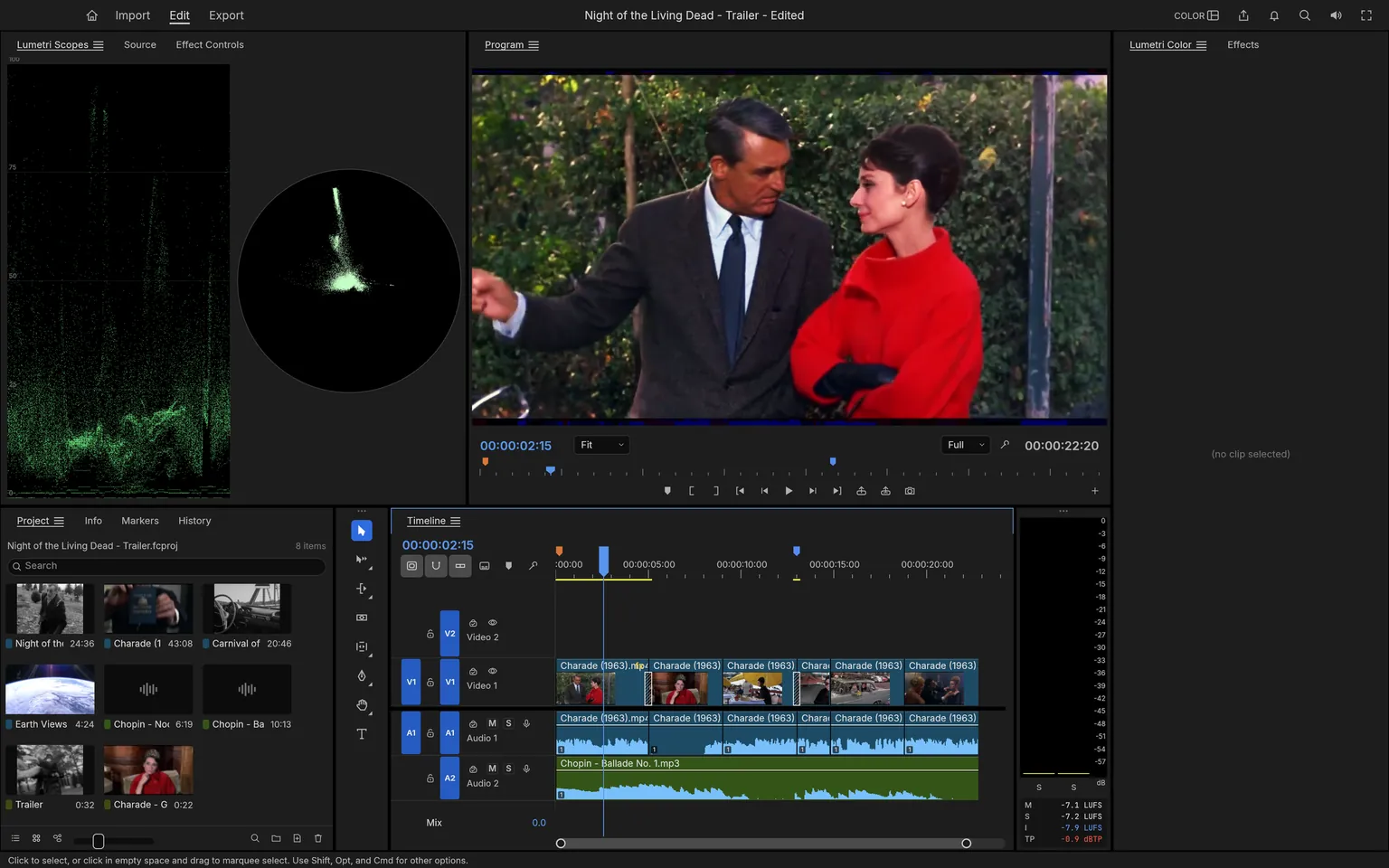
The README itself is honest about the project's stage: PhotoCraft is in alpha and doesn't yet replace Photoshop in day-to-day professional work. The gaps the project lists include generative AI features, missing tools, typography depth and plug-in compatibility. Akita points out others: hundreds of open issues in the repository, limited color management for print (CMYK and ICC profiles) and incompatibilities with PSD files. The screenshot impresses; the engine is still being built.
We tell the full story, and the lessons for those who sell and buy software, in did AI clone Adobe? The ArtCraft case explained.

Why copying Adobe is much harder than it looks
The central argument of Akita's analysis is that the value of modern software isn't all inside the file you download. And what isn't in the file can't be taken apart. He points to four barriers:
- ✓Features that run on the server: Photoshop's generative fill and part of its neural filters, for example, are processed in Adobe's cloud. There is no local program to analyze.
- ✓Data and color science: camera and lens profiles, color management and years of fine-tuning. GIMP, the open image editor, went about three decades without full CMYK editing.
- ✓Licenses and partnerships: Pantone left Adobe's free libraries in 2022, and in professional video the color transforms of cinema cameras come through kits and contracts with the manufacturers.
- ✓A moving target: a 1996 game no longer changes; software sold by subscription changes every week, and the clone chases a product that never stops.
What it costs to rewrite large software with AI
Cost matters too. Akita recalls the case of Bun, a JavaScript tool rewritten from Zig to Rust in 11 days with up to 64 Claude instances working in parallel, at an estimated cost of about US$165,000 in API pricing. It worked because there was complete source code, the original author in charge and a huge test suite to check every result. A clone made from a closed program has none of that.
Why old games are the easiest case
The same reasoning explains why old games are being ported so quickly: they are small programs (Super Mario 64 is about 8 MB, versus about 150 GB for Baldur's Gate 3), studied for decades, with legal questions settled long ago and no further changes. Ports usually require the person to own their copy of the game.
More recent consoles also help: PS4, PS5, Xbox Series and Switch use x86 or ARM processors, the same as computers and phones, so the work focuses on translating system and graphics card calls. PS3 and Xbox 360, with their own architectures (Cell and PowerPC), are much harder.
Even so, there is hype. Akita notes that the community that ports games by hand already criticizes AI-generated ports for alpha-level quality, and that some headlines don't survive a test: a project announced as able to run much of the PS5 catalog ran, in practice, one indie 2D game.
Will tokens become free?
A common argument is that, soon, tokens will cost almost nothing and cloning software will become trivial. Akita's analysis disputes it with numbers: the per-token price of frontier models fell between 1.2 and 3 times since 2023. What fell much faster, according to Epoch AI estimates he cites, was the cost of reaching the same quality, in the range of 5 to 10 times a year.
Even applying the most optimistic drop to Bun's cost, a clone without reference code or tests remains expensive. And there's a limit of another kind: according to GitHub's Octoverse report, 81.5% of contributions on the platform in 2025 happened in private repositories, code no public model saw during training.
What reverse engineering with AI is really for
Away from the headlines, the technique has legitimate and valuable uses, several of them listed by REA itself among the permitted ones:
- ✓Security: finding vulnerabilities in your own or authorized systems before someone else does.
- ✓Malware analysis: understanding what a malicious program does in order to defend against it.
- ✓Interoperability: getting systems that weren't built to talk to each other to exchange data.
- ✓Preservation: keeping alive programs and games whose maker no longer exists.
- ✓Legacy systems: documenting the company's old software that nobody can explain anymore, before migrating or automating it. We show the method in how to document legacy systems with AI.
Is reverse engineering a crime?
In Brazil, no article of law expressly prohibits or authorizes reverse engineering. The Software Law (Law 9,609/98) protects programs as literary works, and the Copyright Law (Law 9,610/98) makes clear that ideas, methods and systems are not protected. The code is protected; the functionality isn't.
The risk shows up elsewhere: reproducing or selling third-party code (article 12 of the Software Law provides for detention and, when the reproduction is for commercial purposes, imprisonment of one to four years), bypassing copy protection, breaching the license agreement or using confidential information obtained through a contract or job, which the Industrial Property Law treats as unfair competition. In the United States, decisions such as Sega v. Accolade (1992) and Sony v. Connectix (2000) accepted disassembling programs for compatibility purposes.
We go deeper in is software reverse engineering a crime in Brazil?. This text is informational: for a concrete case, consult a lawyer.
What changes for your company: security
Everything that runs on the user's device can be analyzed: the mobile app, the desktop program, the browser extension and your website's JavaScript. It has always been that way. The difference is that analysis now costs less time and less expertise, for attackers and defenders alike.
The most common weak point isn't the code itself, it's what gets put in it. GitGuardian's State of Secrets Sprawl 2026 report counted 28.65 million new keys, passwords and tokens exposed in public GitHub repositories in 2025, and commits made with Claude Code's help leaked secrets in 3.2% of cases, versus 1.5% on average. Not by chance, improper credential usage is the first item in the OWASP Mobile Top 10, the main reference for mobile app risks.
The full protection checklist is in reverse engineering and AI: how to protect your app.
What changes for your company: strategy
If a product's edge is just a set of screens anyone can see working, it got cheaper to copy. Not free, as the stage of the ArtCraft apps and Bun's cost show, but cheaper. What stays hard to copy is what isn't in the code: proprietary data, services that run on the server, integration with the customer's process, service, brand and speed of evolution.
The flip side is an opportunity. The same technology that lets you analyze other people's software lets you understand your own: document old systems, find hidden business rules, test your own security and build internal tools faster. Deciding where to apply it is a strategic choice, and it's the kind of question we answer in our AI consulting.
How your company can prepare: a five-step plan
There's no need to wait for the next viral case to act. Five steps cover both the risk and the opportunity:
- ✓Inventory what ships to the customer's device: apps, programs, extensions and the website front end. That's what anyone can analyze.
- ✓Run a secrets scan and move keys and critical rules to the server, following the protection checklist.
- ✓Define an AI usage policy that includes reverse engineering tools: what may be analyzed, with which providers and with which data.
- ✓Pick one legacy system and document it with AI as a pilot project, validated by the people who use the system.
- ✓Train the team to review what AI produces, instead of accepting the first result that looks right.
Quick glossary
The terms that come up most in the news about the subject:
- ✓Binary: the executable file, already compiled, that the computer understands.
- ✓Assembly: a low-level language that represents machine instructions in readable form.
- ✓Decompiler: a tool that tries to rebuild code similar to the original from the binary.
- ✓Clean room: a method in which whoever analyzes the original product doesn't write the new code.
- ✓Decomp and recomp: rebuilding a program's source code from the binary (decomp) and recompiling it for another platform (recomp).
- ✓MCP: the Model Context Protocol, a standard that lets an AI model use external tools, such as the ones REA exposes.
Will programmers disappear?
Akita's conclusion is no. REA is a toolbox for specialists, not a copy button; the ArtCraft apps exist, but they are alphas; Adobe is still alive because much of its value lies in services and data; and, without someone who knows what they're doing, the tool delivers little more than a nice screenshot.
Our reading goes the same way. AI agents multiply the productivity of people who understand the subject and expose those who don't. For companies, the question isn't whether AI will replace the team, but whether the team knows how to use AI with judgment: review what it produces, protect data and choose where it pays off. That's why our AI training for teams teaches Claude, agents and automation with each team's real tasks.
Frequently asked questions
What is reverse engineering with AI?
It's using artificial intelligence agents to analyze an already compiled program and understand how it works, without the source code. The AI operates tools such as Ghidra and IDA, suggests names, explains snippets and writes tests, speeding up work that used to be almost entirely manual.
Can REA copy any program?
No. REA coordinates analysis tools and returns conclusions with evidence. It doesn't recover the original source code or clone apps, and the project itself warns that results may be incomplete or wrong.
Do the ArtCraft apps replace Photoshop and Premiere?
Not yet. The PhotoCraft repository says the app is in alpha and doesn't yet replace Photoshop in day-to-day professional work. The other apps are listed as alpha or in development.
Is reverse engineering illegal in Brazil?
Analyzing a program isn't a crime in itself, but copying or selling third-party code, bypassing copy protection and breaching the license agreement can lead to civil and criminal liability. For a concrete case, consult a lawyer.
Does my company need to worry about this?
If you publish apps, programs or websites with logic in the browser, yes: review what's exposed, especially API keys and rules that should run on the server. And it's worth assessing where the same technique helps, such as documenting old systems.
Do I need to know how to code to use REA?
In practice, yes. Installation is simple, but interpreting the results, validating what the AI concluded and knowing what you're allowed to analyze requires technical knowledge.
Sources
- Fabio Akita: Engenharia Reversa com IA: a Adobe morreu? (Oct 13, 2026, in Portuguese)
- REA (Reverse Engineer Anything): official GitHub repository
- PhotoCraft: ArtCraft's official GitHub repository
- ArtCraft: official Crafting Apps page
- TechSpot: "Software is over": developer uses AI to build free Adobe clones
- Liu, Raff and Micinski: When LLM Decompilers Recompile More and Preserve Less (arXiv, 2026)
- GitGuardian: The State of Secrets Sprawl 2026
- OWASP Mobile Top 10 (2024)
- Law No. 9,609/1998 (Brazilian Software Law, in Portuguese)
- Law No. 9,610/1998 (Brazilian Copyright Law, in Portuguese)
See also
- ServiceAI Consulting for BusinessesProcess mapping, opportunity discovery and an AI implementation roadmap for your business, with strategy before execution.
- ServiceAI Training for TeamsHands-on training so your team learns to use AI day to day, applied to your company's context, not generic theory.
- GlossaryMCP (Model Context Protocol)MCP is an open protocol created by Anthropic that standardizes how AI models connect to tools, data and external systems, so the same agent can access files, APIs and databases in a consistent way.
- BlogREA (Reverse Engineer Anything): what the viral AI reverse engineering tool isWhat REA is, how it connects agents such as Claude Code to tools such as Ghidra and IDA, what it does, what it doesn't and what it costs to use.
- BlogDid AI clone Adobe? What the ArtCraft case teaches about the value of softwareWhat the ArtCraft apps are, presented as alternatives to Photoshop and Premiere, what they already do and what the case teaches about the value of software.
- BlogIs software reverse engineering a crime in Brazil? What the law saysWhat Brazil's Software Law and Copyright Law say about reverse engineering, when analyzing a program becomes a problem and what changes with AI.
- BlogHow to document legacy systems with AI: reverse engineering that works for your companyHow to use AI to understand and document the old system nobody can explain, before migrating or automating it, and the precautions so you don't trust it too much.
- BlogReverse engineering with AI: what's exposed in your app and how to protect itWith AI agents, analyzing an app got fast. See what anyone can extract from your application and how to protect keys, rules and data.
Put AI to work in your company
Talk to the SINOON team and find out which agent, squad or engagement makes sense for where you are now.